Bains d’al-Andalus: History and Contemporary Legacy
How did the hammams of al-Andalus function? Architecture, uses, plan diversity, remains, and modern reinterpretations.
Reading time: 5 minutes
Last historical review: July 24, 2026
The Bains d’al-Andalus are hammams built in the Iberian Peninsula under Muslim rule from the late 8th century through the final centuries of the Middle Ages. They existed in cities, villages, homes, palaces, and fortresses. Their architecture reflects multiple influences and is not simply a reuse of Roman baths.
Key takeaway
Today’s tourist “Arab bath” is not automatically a preserved medieval hammam. It’s important to distinguish archaeological remains, restored monuments, and contemporary spas inspired by Andalusian aesthetics. Each has value, but their historical status differs.
What does al-Andalus mean?
Al-Andalus refers to the territories of the Iberian Peninsula governed by Muslim powers between 711 and the late 15th century, with shifting borders. Baths appear in sources and archaeology from the late 8th and early 9th centuries onward.
A medieval creation, not a renamed Roman thermae
Archaeologist Caroline Fournier’s research reveals a break in the use of large ancient Roman baths. Andalusī hammams incorporate some inherited technical solutions, such as mortars and heating principles, but develop new buildings tied to Islamic culture.
Where were these baths found?
Baths were not limited to major cities. They equipped urban neighborhoods, villages, palaces, citadels, and affluent homes. Their size and decoration depended on patrons, materials, climate, and clientele.
An architecture with many models
A common layout combines a dry area with cold, intermediate, and hot rooms heated by a furnace and hypocaust. However, archaeological study distinguishes several regional and chronological models. Córdoba, Toledo, Jaén, Murcia, and Granada do not replicate a single plan.
| Space | Likely Function | Interpretation Limits |
|---|---|---|
| Changing room or dry area | Reception, changing, resting | Furniture often lost |
| Cold room | Transition and washing | Use varies by plan |
| Intermediate room | Important part of the stay in some baths | Does not always correspond to the Roman tepidarium |
| Hot room | Heat, water, and washing | Specific rituals rarely fully documented |
| Furnace and hypocaust | Heat production and circulation | Uneven archaeological preservation |
Who used the hammam?
Sources indicate both public and private baths with separate arrangements for men and women. Jurists, physicians, and geographers discuss uses, but their texts also express norms and ideals rather than directly describing every daily gesture.
After the Christian conquests
The fate of baths varied: continued use, repurposing, abandonment, or destruction. Some practices persisted among Mudéjar and Morisco populations, while political and religious contexts transformed their role. It is important to avoid assigning a single disappearance date for the entire peninsula.
Remains and current reinterpretations
Buildings like El Bañuelo in Granada or the baths of Jaén allow us to read medieval spaces. Contemporary “Arab baths” may offer water, massage, and decor inspired by tradition; they belong to modern wellness even when emphasizing local heritage.
To understand spatial principles, see the architecture of the hammam.
How to visit methodically?
- Check the proposed dating and its certainty;
- Distinguish original parts from restored ones;
- Identify whether the site is public, private, palatial, or military;
- Do not automatically imagine deep pools and dense steam;
- Compare tourist narratives with archaeological evidence;
- Respect photography and conservation restrictions.
What archaeology can truly confirm
Remains inform us about room layouts, materials, water supply, and building transformations. They do not alone describe sensations, access rules, or every user gesture. These aspects must be cross-referenced with texts, objects, and urban context.
The medieval Iberian Peninsula experienced different periods and powers. Using “Andalusian bath” as a timeless category erases changes between emirate, caliphate, taifa, Almoravid, Almohad, Nasrid, and Christian eras.
Historical heritage and contemporary experience
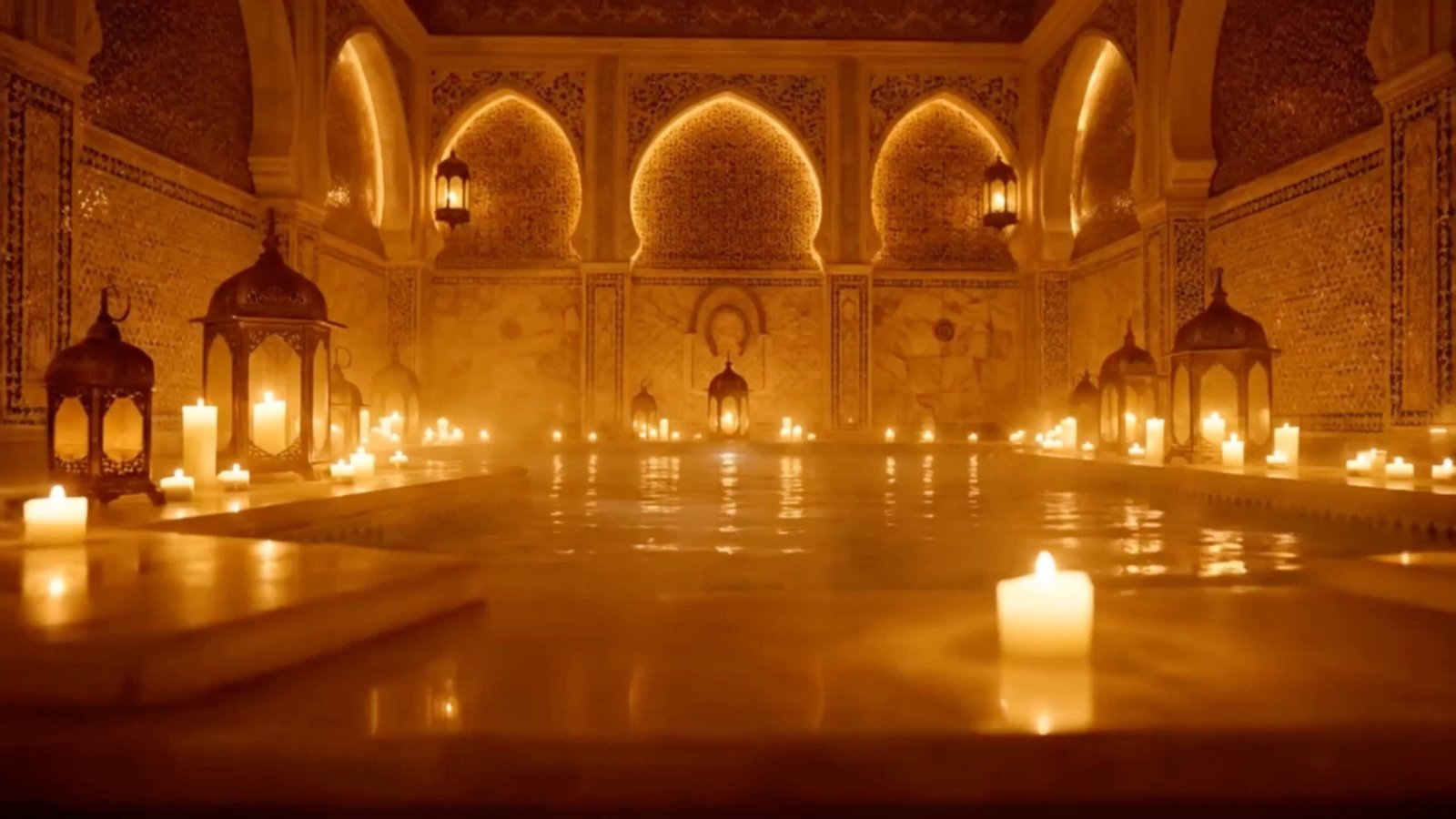
A modern spa inspired by al-Andalus may offer steam, dim lighting, and pools at varied temperatures without occupying a medieval bath or replicating its function. Such reinterpretations can be high quality if clearly presented as such.
To evaluate a site, ask if the building is archaeological, restored, reconstructed, or contemporary; which parts are original; and what sources support the narrative. Heritage gains interest when uncertainties are acknowledged.
Frequently Asked Questions
Are the Arab baths of Spain Roman?
No, generally not. They may use inherited techniques, but Andalusī hammams are specific medieval creations.
Did all baths have three rooms?
No. Gradation is common, but excavations reveal multiple models and very small private baths.
Can you still bathe in a medieval hammam?
Most visitable remains are heritage sites. Modern spas may occupy or evoke distinct historic settings.
Are “Arab bath” and Andalusian hammam synonyms?
In tourism, the terms overlap; historically, it is necessary to identify the date and true nature of the building.
Conclusion
The baths of al-Andalus reveal a medieval culture of the body, water, and city far more diverse than the image of a decorative palace. Archaeology helps separate this heritage from contemporary reinterpretations without devaluing the latter.
Sources
- Caroline Fournier — Les bains d’al-Andalus, VIIIe–XVe siècle, Presses universitaires de Rennes, 2016.
- Les bains d’al-Andalus — Different Hammam Models.
- Spain.info — Arab Baths of Ceuta, official tourism portal.