Hammam or Steam Room: What’s the Difference?
Is a hammam just a steam room? Compare equipment, humidity, rituals, architecture, services, and overall experience.
Reading time: 4 minutes
Last updated: July 24, 2026
A steam room primarily refers to a piece of equipment: a hot, highly humid enclosed space. A hammam may include this equipment, but the term also refers to an establishment and a bathing tradition that often involves multiple rooms, washing, scrubbing, rinsing, resting, and guidance. In modern spas, the two terms are frequently used interchangeably for marketing purposes.
Key takeaway
To know exactly what you’re booking, set aside the label for a moment. Ask whether it’s a standalone cabin or a full bathing circuit, what temperatures are offered, if water is available for washing, and whether soap, scrubs, towels, or a practitioner are included.
The fundamental difference: equipment versus experience
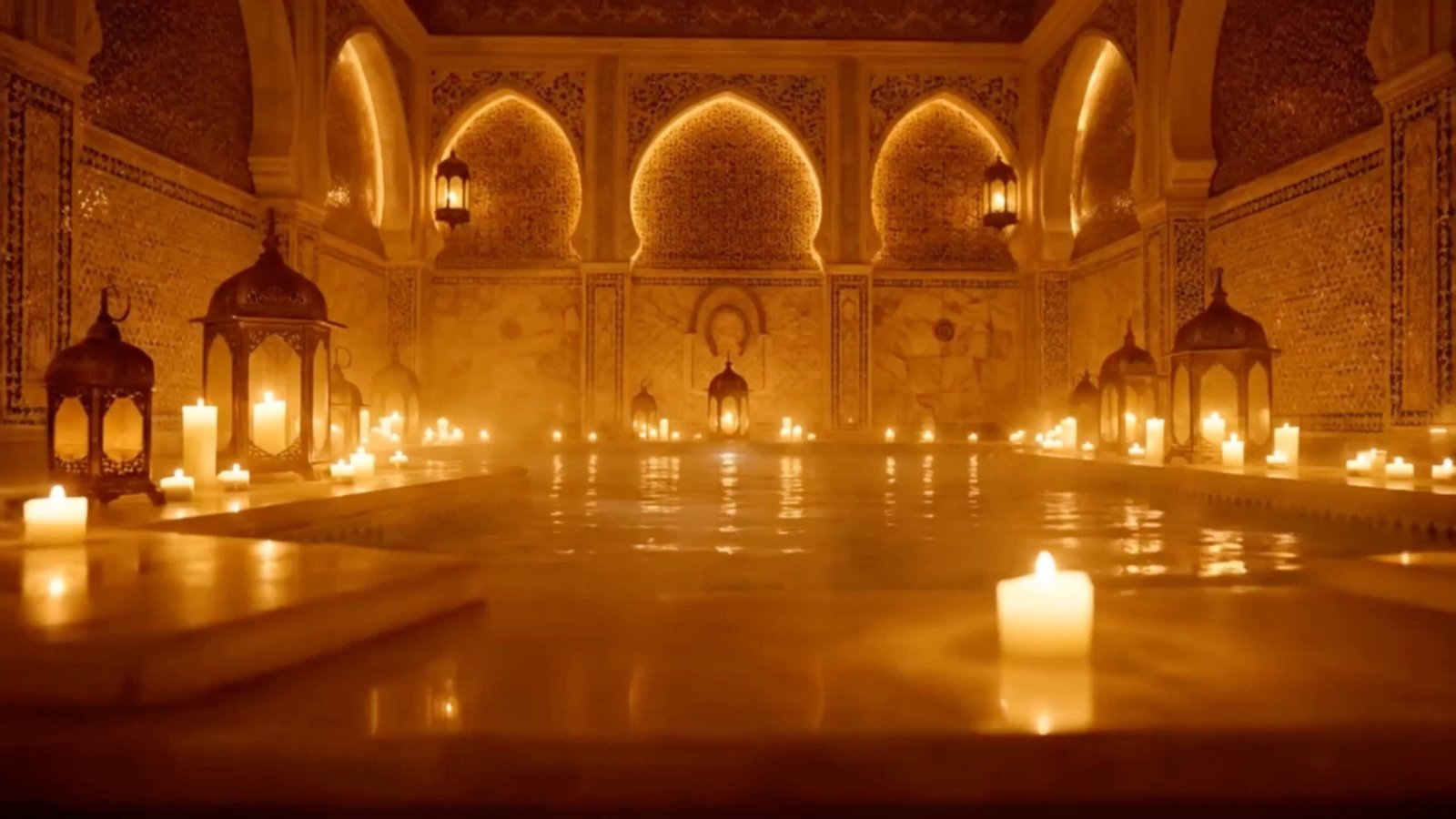
A steam room generates steam within a closed space. It can be found in gyms, hotels, or spas. The traditional hammam is a bath centered around heat and water, with specific architecture and social customs. A modern cabin may borrow the name without replicating the ritual.
Practical comparison
| Criteria | Steam Room | Traditional or Ritual Hammam |
|---|---|---|
| Main focus | Hot, humid cabin | Bath, establishment, and cultural practice |
| Spaces | Usually a single cabin | One or more rooms plus resting areas |
| Water | Shower nearby, not always inside the cabin | Rinsing and washing integral to the experience |
| Treatments | Generally none | Scrubs or foam treatments possible |
| Autonomy | Free access | Either self-guided or assisted |
| Cultural dimension | Minimal or unclaimed | Varies by country and venue |
Temperature and humidity
Both environments use high humidity, but there is no universal standard tied to the word “hammam.” A traditional warm room, a hot room, and a club cabin may all have different conditions. Manufacturer or facility specifications are more reliable than general ranges.
Does the ritual affect safety precautions?
In both cases, the moist heat requires exiting immediately if you feel unwell. An assisted hammam adds considerations about skin type, products, friction, and consent. A self-access cabin carries the risk of staying too long without supervision. See signs related to heat exposure.
How to identify a simple steam cabin?
- A single tiled room with a steam generator;
- No washing stations along the route;
- No soap, scrubbing mitt, or protocol;
- Access included with a pool or gym;
- Duration entirely up to the visitor.
These features don’t imply an inferior experience—just a different offering.
When to choose one or the other?
- Steam room: You want a straightforward humid break within a leisure facility.
- Self-guided hammam: You want to wash and perform your ritual at your own pace.
- Assisted ritual: You prefer a scrub or wash performed by a practitioner.
- Historic hammam: The architecture and cultural context are important to your experience.
Questions to ask before booking
- How many rooms are accessible?
- Does “hammam” refer only to a cabin?
- Is access free or timed?
- What treatments and products are included?
- What attire and towels should I bring?
- Is the steam scented?
Frequently Asked Questions
Is a steam room always less hot than a hammam?
No. Settings vary; check the facility’s temperature and usage guidelines.
Can you do a scrub in a steam cabin?
Only if the rules allow it and if there is a suitable rinsing area.
Is a steam room the same as a hammam?
It may be marketed as such, but it doesn’t necessarily replicate the traditional bath and ritual.
Which is more authentic?
A cabin doesn’t necessarily claim a tradition. For a hammam, authenticity depends on context and should not be judged solely by decor.
Conclusion
A steam room describes the technology; a hammam can describe an entire bathing system. Compare the actual facilities and services included to choose wisely rather than relying on ambiguous commercial names.